Why Fire Doors Fail Inspection
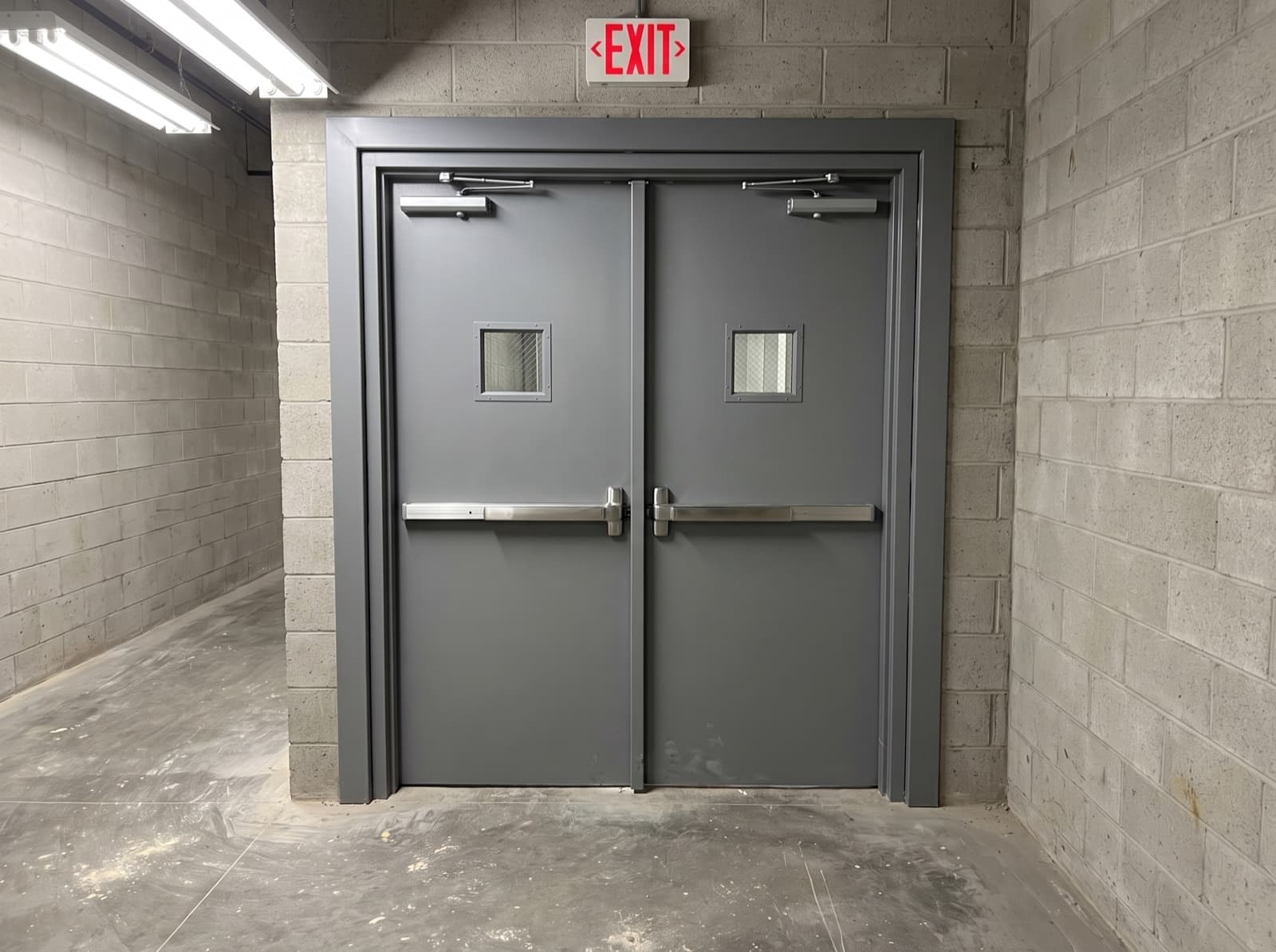
A fire-rated door is only compliant as a complete labelled assembly — the door, the frame, the hardware, and the way it was installed all matter together. The most common failure we see on inspection isn't the door itself; it's a closer that no longer lets the door self-latch, or hardware swapped out for something unlabelled.
What the Code Actually Requires
Doors in fire separations — stairwells, corridors, between occupancies, mechanical rooms — typically require a fire rating under the Ontario Fire Code, and that rating has to carry through the whole assembly, not just the door slab. If you're unsure which openings in your building are affected, that's a common gap we flag during a walkthrough.
Fire-Rated Assemblies We Install
We supply ULC-labelled doors and frames in 45, 90, and 180-minute ratings and install them to NFPA 80 standards. Panic hardware, closers, and latching mechanisms are selected to match the rating, and we make sure the door self-closes and self-latches properly — the detail inspectors check most often.
Steel Doors for Security, Not Just Fire Rating
Rear service doors are the most common break-in point on GTA commercial buildings, and a hollow metal steel door with the right hardware makes that opening a much harder target. We install 16- and 14-gauge steel doors with reinforced strikes, latch guards, multi-point locks, and hinge-side security pins.
Welded vs. Knock-Down Frames
Welded frames are built for masonry openings and offer more rigidity for abuse-prone entrances. Knock-down frames install into drywall openings and are faster to fit on renovation projects. We stock both in standard sizes and can advise which fits your opening and construction type.
What Steel Doors Cost Installed
A standard hollow metal door with frame and hardware runs $1,800 to $4,000 installed. Fire-rated assemblies add roughly 15 to 30 percent for labelled components and the installation standard they require. Security upgrades like multi-point locks or reinforced strikes are quoted per spec.
Supply-Only or Full Install
General contractors can order doors and frames supplied to site for their own crews to install. Building owners typically want full supply-and-install, including old door disposal — we handle both depending on how your project is set up.
Not Sure If a Door Needs a Rating?
Contact us for a free walkthrough. We'll flag any openings that look non-compliant, tell you honestly what's required, and quote the fix — whether that's a door and frame or a hardware adjustment.
Issues We Hear About Most Often
Property managers, retailers, and GCs across the GTA run into the same patterns. Here is what usually brings people to this service — and how we approach it.
Fire doors that won't self-latch
A closer out of adjustment is the most common reason a fire door fails inspection, even though the door and frame are both rated correctly. We check and adjust closers as part of every service call.
Extra locks that violate fire code
Panic hardware exists so a single motion opens the door for egress — an added deadbolt or chain undermines that and can fail inspection outright. We flag non-compliant hardware and replace it with a code-correct alternative.
Rear doors are the easiest break-in target
A thin steel door with a basic strike plate is a five-minute job for someone determined. Reinforced strikes, latch guards, and heavier-gauge steel make that same door a much harder target.
Confusion between glazing and hollow metal scope
On storefront jobs with both glass and steel openings, it's not always clear which contractor owns which scope. We handle both, so nothing gets missed between trades.
Steel Doors Across the GTA
We provide steel doors throughout Toronto and the Greater Toronto Area, with regionally routed crews for fast response: